

5 Movies From 1999 That Completely Changed Hollywood Forever
1999 wasn't only a special year because of its once-in-a-millennium calendar position. It also found itself at a very particular crossroads for three different generations. The first Baby Boomers were beginning to retire, while both the oldest Gen Xers and the youngest Millennials were either just reaching, or had recently reached, adulthood. That unique convergence reverberated throughout pop culture, and it seemed to be felt especially strongly through film — both in who movies were made by, and who movies were made for.
All of that, coupled with equal parts excitement and paranoia about how computers were clearly about to take over all of our lives, made 1999 a groundbreaking year for Hollywood. Some of the movies released that year changed film for the better. Some arguably made film worse. Most, however, fell somewhere in the middle of those two extremes. Either way, we feel these five movies contributed most significantly to changing the language of film going into the 2000s and beyond.
These are not intended to be the actual best movies of the '90s, though several of them definitely deserve that label. Rather, they are the most influential — for better or worse — in how they affected both the making and the selling of movies going forward.
Fight Club
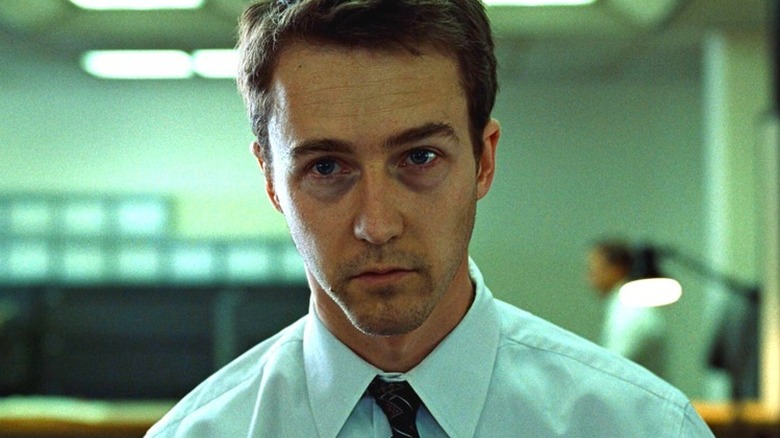
When most Gen Xers were hitting their teenage years in the '90s, there was a strong push against the perceived greed and consumerism that was so rampant in the '80s. As their parents seemed to double down on measuring happiness by wealth and material things, Gen Xers were determined to do things differently as adults. So when they started their careers at the end of the '90s, and began getting pushed down the road of being good little corporate worker bees who were promised good money and encouraged to spend that money on "stuff," they rebelled. And "Fight Club" was the cinematic manifesto for that rebellion.
"Fight Club" very much felt like a rallying cry from a generation of new adults who wanted to figuratively blow up the system — so the movie depicted that by having a bunch of people literally blow up the system. It was far from the first "damn the man!" type of film, but it approached it in a completely different way. This wasn't a movie of quiet, peaceful, subtle protest. It was in your face about it, and that would set the precedent for future films about rebellion.
Beyond its themes and messaging, "Fight Club" was also at the forefront of a new style of filmmaking, one that used CGI to break new ground in cinematography. That meant no longer being beholden to where a human camera operator was able to physically hold and move a camera. Director David Fincher was also at the forefront of the generation of visionary '90s music video directors who became acclaimed 2000s filmmakers, including Spike Jonze, Jonathan Glazer, Michel Gondry, and others.
The Blair Witch Project
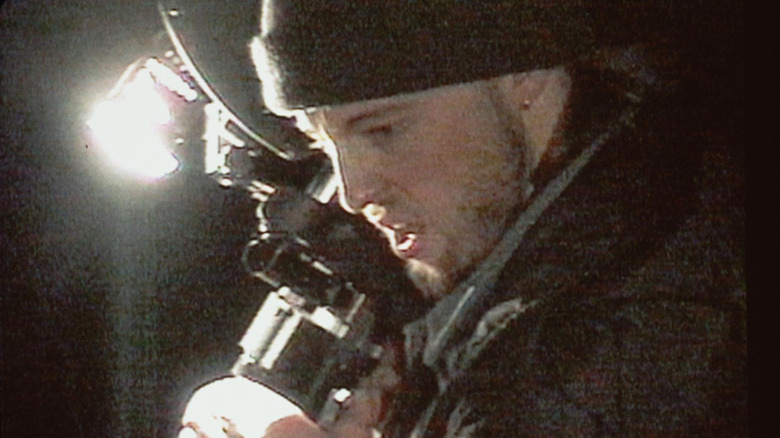
"The Blair Witch Project" was not the first entry in the found footage horror movie genre, but the movie's massive success — still one of the most profitable movies of all time — gets the lion's share of the credit for how prevalent found footage/shaky cam movies became in the 21st century. The aesthetic has even gone beyond horror movies to permeate multiple genres in one fashion or another. That is a huge reason why "The Blair Witch Project" is on this list, but it's far from the only one.
"The Blair Witch Project" was one of the first movies to utilize the internet for its marketing in a really fresh and original way. Up to that point, a movie's website — or, before that, its AOL page — would just be a bare bones splash page with basic info, a few images, and maybe a trailer. But "The Blair Witch Project" took a different approach, launching a website that built an entire elaborate mythos around the film. So effective was the marketing that there was a time when people actually weren't sure if the footage the movie presented was fictional, or if it did indeed depict a trio of real hikers that truly did get lost in the woods and have never been seen since.
Every movie since then with any sort of mysterious viral marketing campaign has surely used "The Blair Witch Project" as the blueprint. It's obviously much easier now thanks to social media — and can be more elaborate with the prevalence of online video — but they are only running because "The Blair Witch Project" walked first.
Star Wars: Episode I – The Phantom Menace
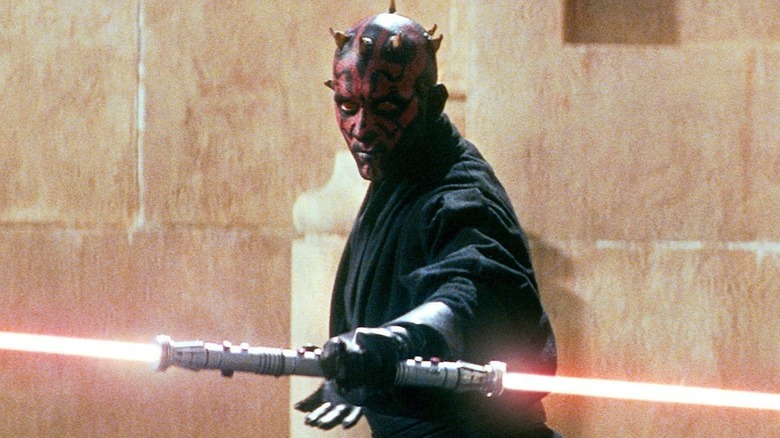
The hype leading up to the release of "Star Wars: Episode I – The Phantom Menace" was unlike anything Hollywood — or mass media as a whole — had ever seen. We take legacy sequels for granted these days, but at the time, it was unusual to see a film franchise that was dormant for 16 years coming back with a full-fledged theatrical sequel. Its massive success got everyone who had a beloved film franchise collecting dust figuring out how they could revive theirs just as profitably. "Blade Runner 2049," "Mad Max: Fury Road," "Ghostbusters: Afterlife," "Top Gun: Maverick" — none of them happen without "The Phantom Menace" making close to a billion dollars in 1999 money.
"Phantom Menace" also blazed new trails in filmmaking technology. It was among the first films to have fully-constructed virtual worlds inhabited by live actors, it pioneered massive crowd shots composed of hundreds of digital characters, and it was the first major theatrical release to screen on digital projectors. Jar Jar Binks was the first fully CGI creation to be a major supporting character in a live-action movie, and how much he interacted with and moved among the live actors was groundbreaking. Again, there would be no Gollum or Dobby, to name a few, without Jar Jar.
All that said, "The Phantom Menace" remains the lowest-rated "Star Wars" movie on Rotten Tomatoes. Its release represented a major turning point in not only "Star Wars" fandom, but fandom culture in general. Previously, fandoms tended to be characterized as a group that loved a property. But the backlash to "The Phantom Menace" unfortunately ushered in a new era of fandom, one marred by criticism, nitpicking, and in-fighting rather than collective affection.
The Matrix
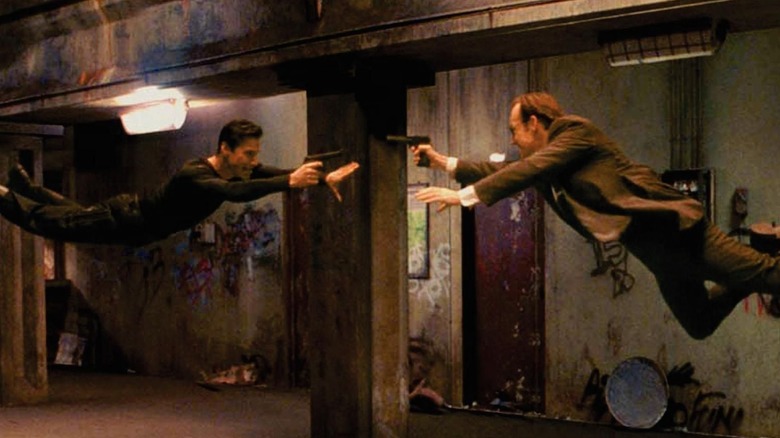
In 1999, we weren't yet at the point where everybody had a computer in their house, let alone everyone having consistent — or any — access to the internet. Even so, there was a sense that computers were about to change the world, for better or worse, with Y2K panic alone hitting a fever pitch. In other words, it was the perfect year to release a movie that depicted a world where the technology we created not only turned on us, but enslaved us.
"The Matrix" follows a long sci-fi tradition that imagines a future where humanity's reliance on technology backfires in catastrophic fashion. But it broke new ground in its use of virtual worlds, spaces where humans could digitally inject themselves into a living, breathing reality barely distinguishable from the real one. Sci-fi had imagined things like that before, but never as fully realized or as plausible as in "The Matrix." It marked a clearly defined turning point between sci-fi that imagined enslavement by robots being set in a distant future, and that future being just around the corner. Subsequent films with those same themes have rarely even bothered to take place more than a few years ahead of the present.
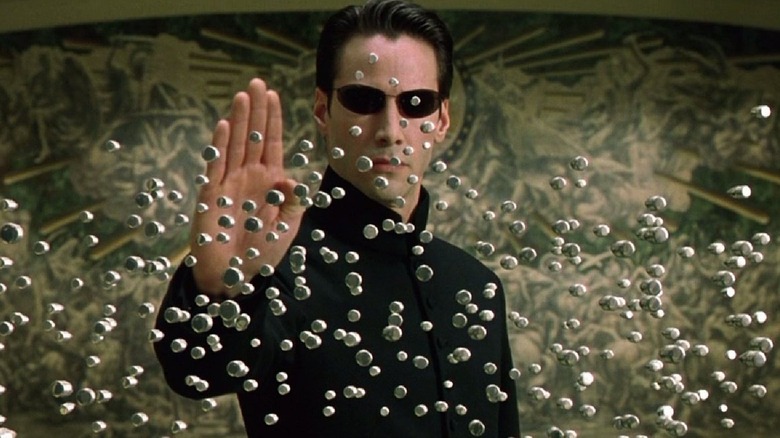
Of course, "The Matrix" was also a total game changer in terms of special effects. Every movie for the next 10 years had some version of bullet time, and highly stylized slo-mo is still commonplace for action scenes. Zack Snyder owes his entire filmmaking style to "The Matrix," as does pretty much anyone else who has made a sci-fi or action film since 1999.
Toy Story 2
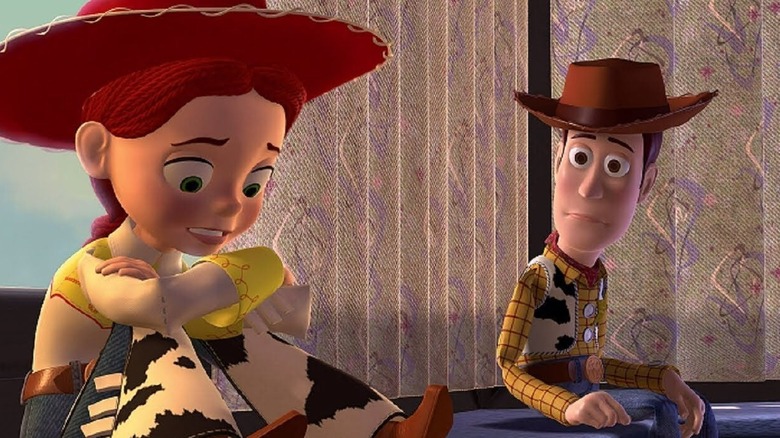
Before "Toy Story 2," sequels to animated movies tended to be relegated to direct-to-video or made-for-TV fare. Thanks in part to underperforming theatrical animated sequels like "An American Tale: Fievel Goes West" and "The Rescuers Down Under", the '90s became the decade of animated movies going straight to VHS. Even massive hits like "Aladdin" and "The Lion King" only got small-screen sequels. Despite 1994's "The Return of Jafar" raked in an estimated $100 million in video sales, Disney was still reluctant to give animated sequels the theatrical treatment.
Enter "Toy Story 2." Although it too was meant to be a direct-to-video release, it was eventually decided that "Toy Story 2" should see a full theatrical rollout. $500 million in box office receipts later, the idea of animated sequels being quick and cheap home releases went out the window. In the 2000s, just about every computer-animated movie that was even remotely successful got a sequel, if not multiple, particularly after 2004's "Shrek 2" was likewise a monster theatrical hit.
Obviously Pixar in particular would soon prove that sequels were the studio's thing, with a number of them turning into full-fledged franchises. Even Disney itself eventually broke its own self-imposed rule of not releasing sequels in theaters, with "Frozen," "Moana," "Wreck-It Ralph," and "Zootopia" all yielding theatrically-released follow-ups. And it's all thanks to "Toy Story 2."