

5 Best Movies Like Marty Supreme
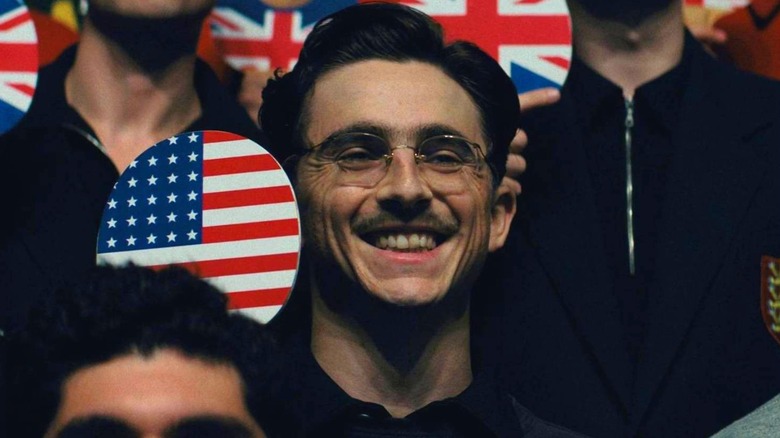
Saying that Josh Safdie's "Marty Supreme" is just about table tennis is kind of like saying "Dune" is just about spice. It's not entirely inaccurate, but there's so much more going on. "Marty Supreme" is a story about ambition and the drive to achieve greatness. Marty Mauser (Timothée Chalamet, who delivers perhaps his finest performance to date) drives pretty much everyone away with his callousness. He wants to be the best, and he doesn't care who he has to step over to get there.
Naturally, this comes back to bite him when he's unable to secure enough money to pay off a fine and get to the World Championship in Japan. The second half of the movie is largely a race against time, as Marty runs around New York trying to make amends, get enough money to compete, and recognize what an awful person he's been to practically everyone in his orbit. It's among the most expensive A24 movies to date, and every penny gets shown on screen with this globe-trotting adventure that demonstrates the cost of unchecked ambition.
When you're done watching this two-and-a-half hour spectacle, you'll probably start looking for something similar to watch next — it's that good. Fortunately, there are some other movies like "Marty Supreme" out there that will scratch your itch. That doesn't necessarily mean they're about sports. More than anything, they're fascinating character pieces about the lengths people will go to in order to attain their dreams, no matter the cost.
Uncut Gems
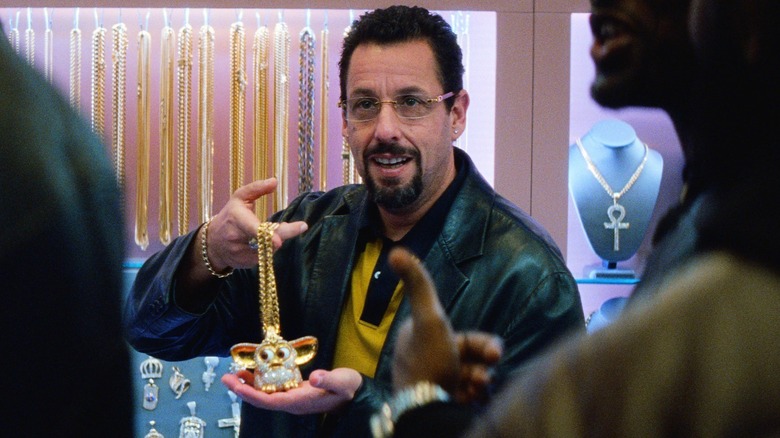
Before Josh Safdie ventured out on his own to make "Marty Supreme," he and his brother Benny Safdie made a couple of films as a duo. One of them is 2019's "Uncut Gems," which is arguably their magnum opus. Both Marty Mauser and Howard Ratner (Adam Sandler) of "Uncut Gems" are addicted to winning, but Howard somehow has even more expensive tastes than Marty. He's addicted to gambling, and throughout the course of the film, we see him get into one bind after the next.
Just when he gets enough money to get out of his debts, he turns right around and puts it on another bet, making "Uncut Gems" a never-ending exercise in anxiety, as Howard seems utterly incapable of doing the right thing. These types of movies are the Safdie brothers' bread and butter. While Benny Safdie did something different by making the Dwayne Johnson-led sports biopic "The Smashing Machine," Josh Safdie offered another stressful epic with "Marty Supreme."
There have been a lot of conversations about whether or not Timothée Chalamet should have won the best actor Oscar over Michael B. Jordan (who scooped the prize for his work in "Sinners"), and there are some who also believe that Sandler should have been in contention for his turn as Howard Ratner. The only reason Sandler didn't get an Oscar nomination for "Uncut Gems" is because this role is way out of his normal wheelhouse. That just makes his performance all the more impressive, as he brings his usual charisma to a complete scumbag you can't take your eyes off.
The Color of Money
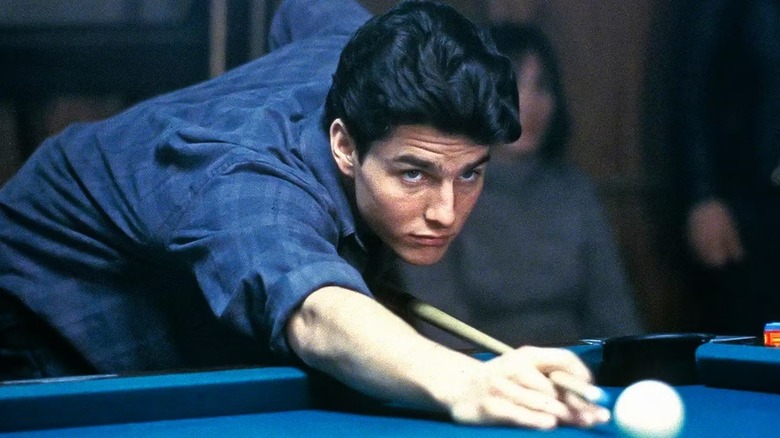
Legacy sequels are all the rage nowadays, but they've been around longer than you think. Martin Scorsese made a spectacular one in 1986 with "The Color of Money," a sequel to 1961's "The Hustler." Paul Newman plays Fast Eddie in both films, but in the sequel, he becomes a mentor of sorts to a young, cocky upstart named Vincent Lauria (Tom Cruise). Along with Vincent's girlfriend Carmen (Mary Elizabeth Mastrantonio), the three of them hustle pool halls and reignite Eddie's love of the game.
"Marty Supreme" is set in the 1950s, but it has the aesthetic of a long-lost '80s film. Marty Mauser has a similar kinetic energy to Vincent in "The Color of Money," which is easily one of Tom Cruise's best movies. There's also something to be said about how '80s songs, like "Everybody Wants to Rule the World" and "Forever Young," are utilized. Additionally, both films are primarily set in and around New York City, and they both portray the Big Apple in all of its gritty glory.
If you enjoyed the scene in "Marty Supreme" where Marty and Wally (Tyler Okonma) hustle some rubes out of their hard-earned cash, then "The Color of Money" is right up your alley. Perhaps the only major difference is that, unlike Marty, Vincent has a mentor in his corner. Newman didn't lose a step between decades when returning to "The Color of Money," and he even won the Oscar for best actor for this performance.
I, Tonya
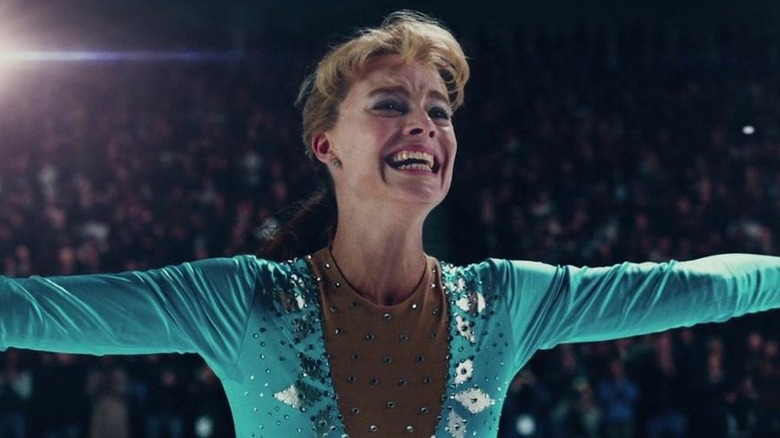
Both "Marty Supreme" and "I, Tonya" are sports stories that are actually character studies in disguise. "I, Tonya" follows the mostly real-life story of Tonya Harding (Margot Robbie), who trained to be a figure skater from a young age. But this drive to excel comes at the hands of abuse from her mother (Allison Janney) until Tonya does actually make it to the Olympics. This leads into the story everyone knows: Tonya's ex husband, Jeff Gillooly (Sebastian Stan), arranged an attack on her rival Nancy Kerrigan (Caitlin Carver) without her knowledge, bringing down any hopes of Tonya having a future in the sport.
There can be a debate over whether "Marty Supreme" has a happy or sad ending for its titular character. "I, Tonya" is nothing short of an utter tragedy. Tonya worked at figure skating her entire life, becoming good enough to make it to the Olympics, and it all came crashing down due to people who believed she needed an extra boost. Of course, there is an aspect of Tonya being a somewhat unreliable narrator, but it's clear that the odds were always stacked against her.
Both of these films offer inversions of the American dream. Marty shows how success is largely built around hustling others and faking it until you make it. Meanwhile, "I, Tonya" shows how Tonya probably never could have won gold simply because she didn't come from the "right" upbringing. She's frequently punished for her harsher demeanor over the more prim and proper Nancy. It shows how greatness is often reserved for those who already have a leg up.
Challengers
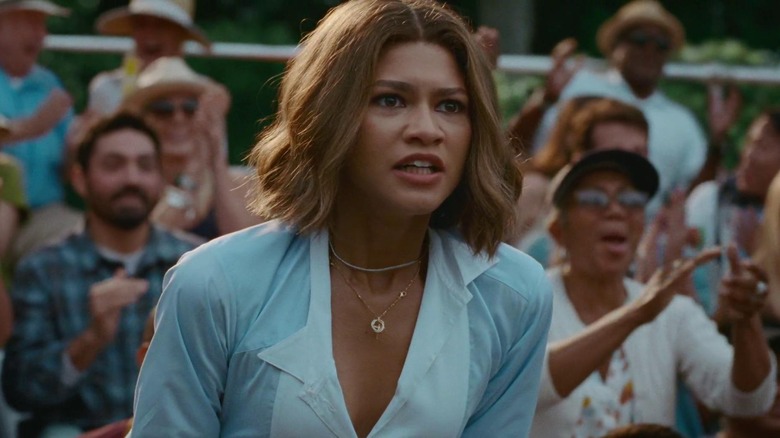
There's a lot going on in "Marty Supreme." You've got the table tennis aspect and then the nonstop hustle and grind for Marty to make enough money to get to Japan. But if you look underneath the surface, there's also the love story where Marty has a kid with Rachel (Odessa A'Zion), and while he pushes her away initially, he comes back around by the end.
"Challengers" also has a romance within a sports story, as Patrick (Josh O'Connor) and Art (Mike Faist) go from best friends to enemies when their tennis paths take them in different directions. And even though they both liked tennis prodigy Tashi Duncan (Zendaya), Art is the one who gets with her. This splits up Patrick and Art, and the film mostly hones in on the interpersonal dynamics at play between this love triangle. "Challengers" becomes more about their personal drama as opposed to the significance of any given match.
Both films have surprisingly similar final matches. Marty takes on Endo (Koto Kawaguchi) in a meaningless exhibition match, but since Marty can't go to the World Championship, it's his last shot at any kind of greatness. Patrick and Art also duel each other in a tennis match, but it's not Wimbledon or anything. The stakes of the match are less important than the characters' inner turmoil and what a victory in that moment would mean for any of them.
Black Swan

Ambition is a great quality to have, but there can be a dark side to it, and both "Marty Supreme" and "Black Swan" explore that. While Marty gets some kind of catharsis by the end, he has to go to hell and back to get there. "Black Swan" offers a far less forgiving look at what can happen when you lose yourself in the pursuit of greatness.
Darren Aronofsky's film sees Nina (Natalie Portman) vie for the dual role of Odette and Odile in a production of "Black Swan," but she has a new rival in the form of Lily (Mila Kunis), who may be a better fit. In the pursuit to prove she can play both the innocent White Swan and more sensual Black Swan, Nina begins to lose her grip on reality. "Black Swan" gets more into the realm of psychological horror, but the message is the same as in "Marty Supreme" — at a certain point, the pursuit of greatness is more of a liability than an asset.
With hustle culture permeating the zeitgeist, there's the question of how far one should go to attain their dreams. At what point is the cost too great? "Black Swan" and "Marty Supreme" utilize different genres to tell what's ultimately the same story. But while one could look at "Marty Supreme" as an inspirational tale in the right light, the ending of "Black Swan" is nothing but a tragedy.